Cat6 vs. Cat6a: The Cabling Decision That Shapes Your Whole Network
Your cabling will outlive three routers. Better to get it right once. Here is the practical difference between Cat6 and Cat6a, and what a New Jersey home or office usually needs.
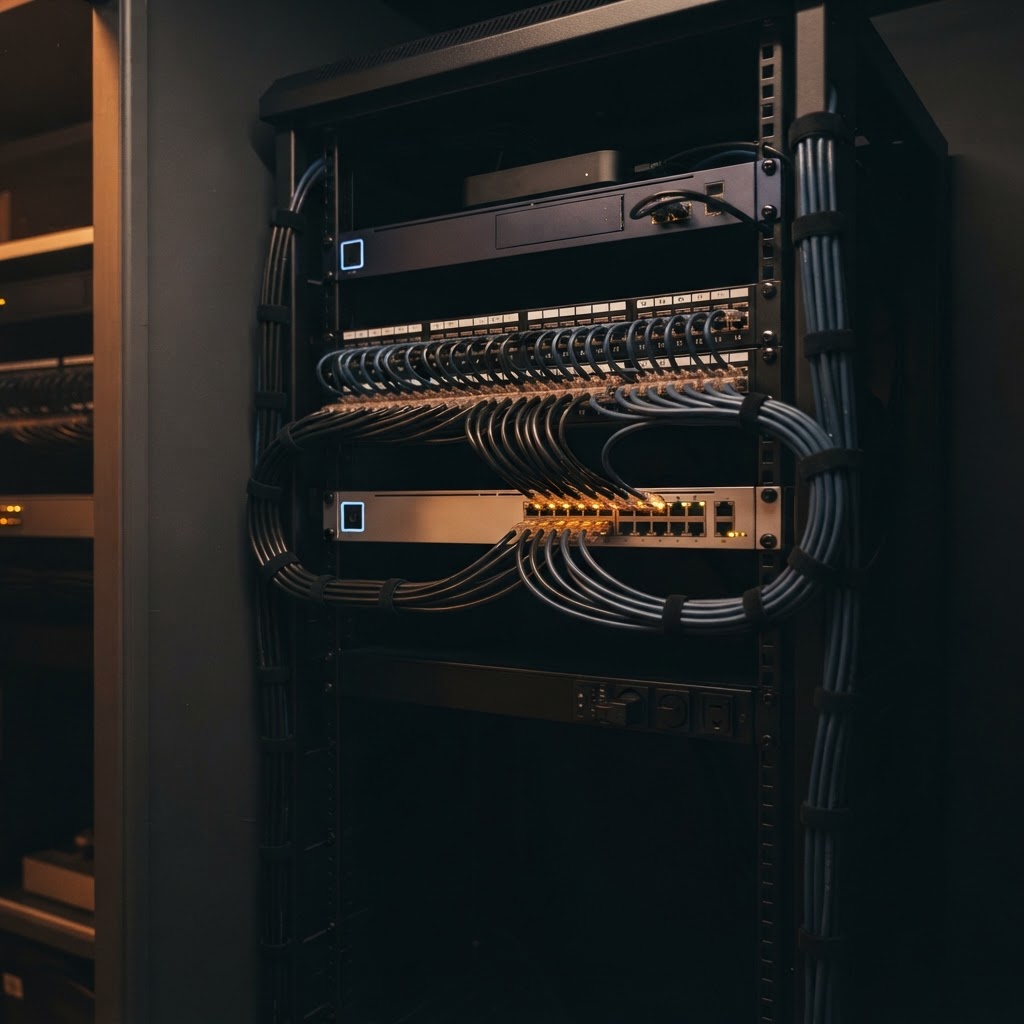
Wireless gets all the attention, but every fast, reliable connection in your home still ends in a cable somewhere. Cameras, access points, smart TVs, workstations, and a growing pile of PoE devices all depend on the wiring behind the wall. Of all the decisions in a network project, cabling is the one you are least likely to redo, so it is worth getting right the first time.
The Short Version
Both Cat6 and Cat6a carry gigabit speeds easily. The difference shows up at 10 gigabit: Cat6 is rated for 10GbE at runs up to about 55 meters, while Cat6a holds 10GbE across the full 100-meter channel. Cat6a also has heavier shielding and tighter manufacturing tolerances, so it resists interference better in a home with electrical panels, appliances, and dimmers sharing the same walls.
Where Cat6 Is Usually Fine
- Short runs to cameras, doorbells, and access points, where you are delivering power and a few hundred megabits at most.
- Retrofits in a finished house where pulling heavy cable is not realistic and the runs are well under 45 meters.
- Budget-sensitive projects where the money is better spent on access points than on copper.
Where Cat6a Earns Its Price
- New construction or a renovation with walls open. The labor is the expensive part, and once the drywall closes, cable choice is locked in for a decade.
- Long runs to a detached garage, a shop, or the far corner of a large property.
- Anywhere near electrical equipment, motors, or an HVAC mechanical room, where shielding keeps the signal clean.
- Anyone planning a 10 gigabit backhaul between a network closet and a media room or office.
The Part Most People Overlook
Cable is a small fraction of a cabling project. The rest is design: home runs back to a single location, leaving conduit for the run you will want later, separating data from line voltage, labeling every jack at both ends, terminating and testing to spec, and mounting a rack that can breathe. A neat, tested Cat6 install beats a sloppy Cat6a install every single time.
We also insist on a single patch panel location. It makes the network understandable to anyone who opens the door later, and it is what turns a tangle of cables into something that can be serviced without guesswork.
Practical Advice for New Jersey Homes
If walls are open, we spec Cat6a to the perimeter and to any outdoor location, and Cat6 to standard interior drops. If you are retrofitting, we run Cat6 to the rooms that need it, prioritize the exterior camera locations while the weather is cooperative, and leave pull strings in any wall we open so the next round is quick and clean.
What to Ask Any Installer
Ask whether the runs will be tested and certified, whether the jacks will be labeled, whether a patch panel is included, and how long the work is guaranteed. Those four questions separate a network that lasts from one that has to be rebuilt in three years. If you would like your current wiring evaluated before you add cameras or access points, we can map what you have and tell you plainly what is holding you back.
Advanced Tech Solutions LLC
New Jersey Smart Home Experts