Wired vs. Wireless Security Cameras: Which Is Right for Your Home?
Wired or wireless? It's the first question every homeowner asks about camera systems. Here's an honest breakdown of the trade-offs, and the setup we recommend for most New Jersey homes.
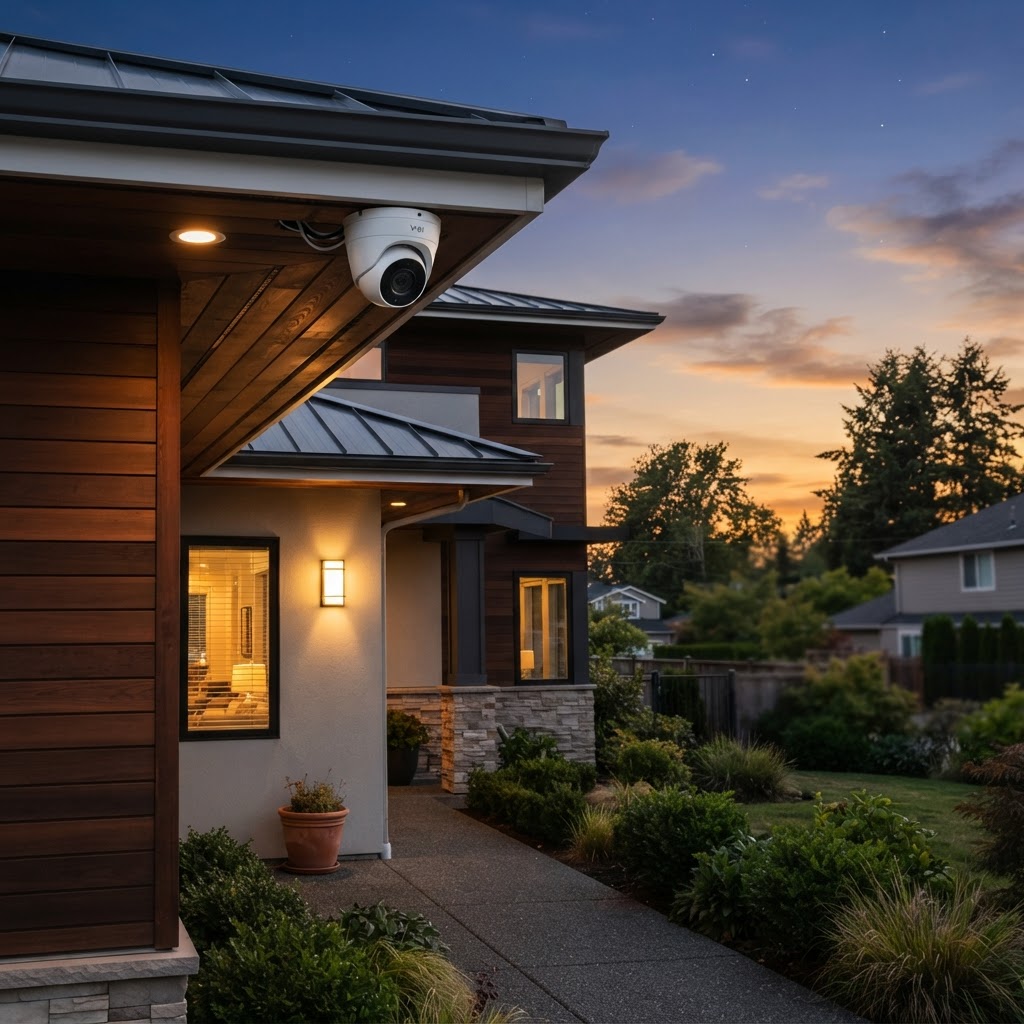
When homeowners in New Jersey call us about camera systems, the first question is almost always the same: "Do I go wired or wireless?" It's a fair question — and the honest answer is that it depends on your property, your budget, and what you're trying to protect. Here's a straightforward breakdown to help you decide.
What "Wired" and "Wireless" Really Mean
First, a quick clarification. Almost every modern security camera is "wireless" in the sense that it sends video to your phone. What we're really comparing is how the camera gets power and how it transmits footage.
- Wired (IP) cameras run on structured cabling (usually Cat6) that delivers both power (PoE) and data through a single cable back to a network video recorder (NVR).
- Wireless cameras connect over your WiFi network and are typically battery-powered or plugged into a nearby outlet, storing footage in the cloud or on a local hub.
The Case for Wired Systems
For whole-property coverage, wired IP camera systems are the gold standard, and it's not close. Because each camera is hardwired, you get a rock-solid connection that doesn't drop when your WiFi hiccups, no dependence on battery life, and continuous 24/7 recording to a local NVR. The footage quality is also better — wired systems handle 4K cameras, night vision, and heavy motion-detection workloads without the compression and lag that can plague wireless streams.
Wired systems are also harder to defeat. There's no wireless signal to jam and no battery to drain. For businesses, rental properties, and larger homes, this reliability is usually worth the extra installation effort.
The Case for Wireless Cameras
Where wireless shines is convenience and flexibility. A battery-powered camera can be mounted anywhere in minutes — a detached garage, a fence line, a rental unit — with no cabling at all. They're affordable, easy to relocate, and perfect for covering one or two specific spots rather than the whole property.
The trade-offs: batteries need recharging every few months, footage is typically cloud-based (which usually means a subscription), and performance depends entirely on your WiFi signal strength at the camera's location.
Our Recommendation
For most New Jersey homes, the best answer is a hybrid approach. We typically recommend wired IP cameras for the main coverage areas — entryways, driveways, and the perimeter — with one or two wireless cameras for outbuildings or spots that cable can't reach. That combination gives you dependable 24/7 recording where it matters most, plus flexibility where it doesn't.
Every property is different. If you're weighing your options, we're happy to walk the property with you and map out exactly what each approach would look like — with no obligation.
Advanced Tech Solutions LLC
New Jersey Smart Home Experts