Access Control for NJ Businesses: Cards, Fobs, or Mobile Credentials?
Lost keys, re-keying bills, and no record of who came in when. Here is how modern access control works for New Jersey businesses, and which credential type actually fits your doors.
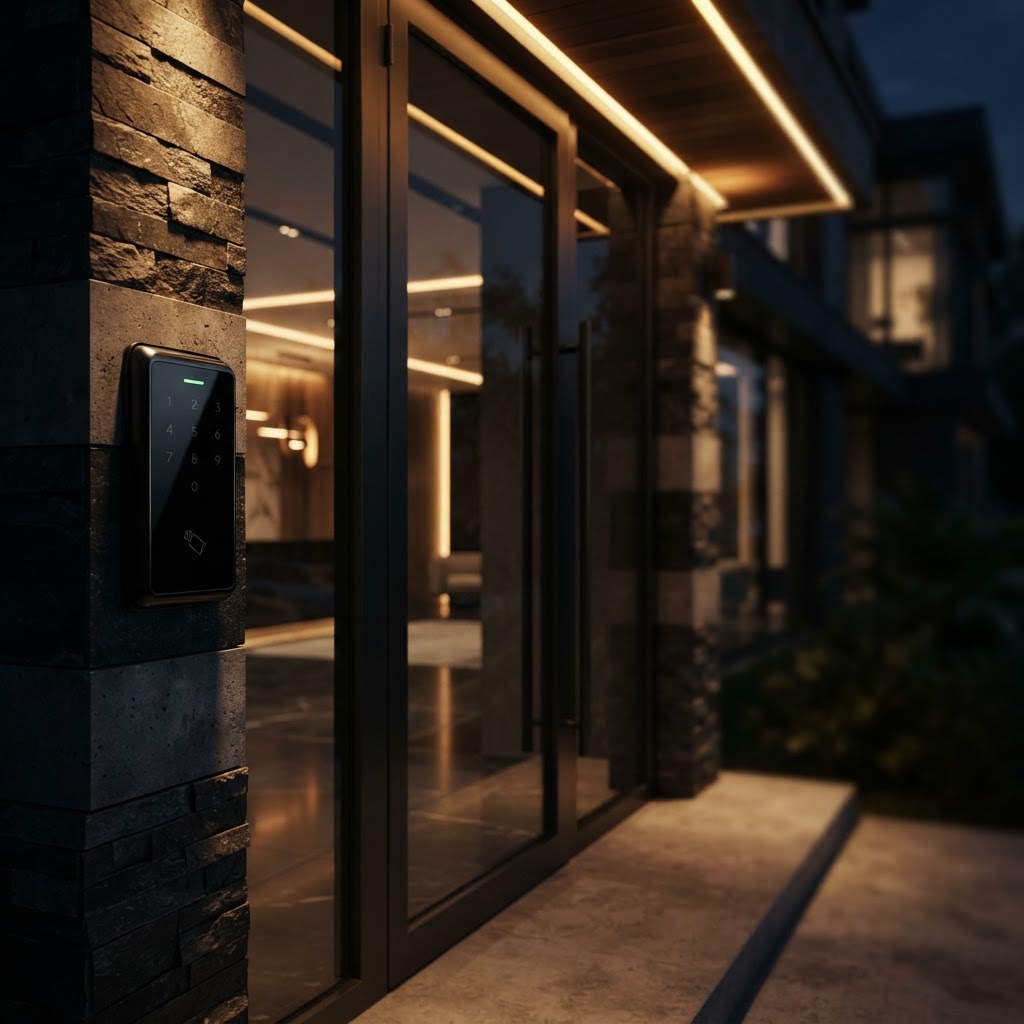
If your New Jersey business still runs on physical keys, you already know the downsides. A lost key means re-keying every lock it opened. A departing employee hands back one of five copies and nobody is quite sure. And when something goes missing over the weekend, there is no record of who was in the building at 2 a.m. Access control replaces all of that with a system you can manage from a browser or a phone.
What an Access Control System Actually Does
A modern system is three pieces working together: a reader at each door, a controller that makes the decision, and software that ties it to your people. You decide who is allowed through which door, and on what schedule. The reader reads a credential, the controller checks it against the rules, and the door unlocks. Every entry is logged with a name and a timestamp, whether the door was held open, and whether it was forced.
That is the real shift. Keys are anonymous, so a lost key is a permanent risk you cannot trace. A credential is tied to a person, and it can be revoked in seconds from anywhere.
Cards, Fobs, or Mobile Credentials
- Key cards and fobs are still the workhorse. They are inexpensive, simple to issue, and anyone can use one without training. The catch is that they can be handed to someone else or left in a jacket, so pair them with a PIN at sensitive doors.
- Mobile credentials put the credential inside a phone or watch, using Bluetooth or NFC. Nobody forgets their phone. Issuing and revoking is instant, which is exactly what you want for contractors and seasonal staff. It is the fastest growing option for offices and medical suites.
- PIN codes cost almost nothing to add and suit one-off vendors or a shared storage room, but they spread between people in a way a card cannot.
For most businesses we install a mix: mobile credentials for staff, cards for anyone who prefers them, and a PIN pad at a back door or utility room.
Wired or Wireless Locks
A traditional hardwired reader is dependable and inexpensive to own long term, but it needs cabling run to the door frame. If your building is finished and drywall is not coming down, a wireless or battery-powered lock set can be the practical answer for a glass entry or a conference room. Battery units typically run for a year or more on standard cells, and they report their battery level to the software so you are never locked out by surprise.
What Drives the Cost
Door count and door type matter far more than the software. A single wood-frame interior door is straightforward. Glass storefront doors, exterior doors that need electric strikes and maglocks, and doors that must release automatically on fire alarm all add hardware and labor. We survey the doors first, then quote, so there are no surprises after the first day on site.
Why Integrations Matter
Access control should not be a separate island. Tied to your camera system, a badge at the front door can pull up the matching camera feed. Tied to your alarm, arming the business at night can unlock only the designated exit. Tied to a doorbell or intercom, a delivery can be released by staff without walking to the door. These connections are where the system starts paying for itself in convenience.
Before You Buy
Walk your building and list every door you want to control, then mark which ones are currently keyed. Nine times out of ten that list is longer than expected, and a phased plan beats one large invoice. If you want a second opinion on what your doors actually need, we can walk the site and put together a plan.
Advanced Tech Solutions LLC
New Jersey Smart Home Experts